Growth Stalls as Inflation-Fighting Costs Compound
Is business investment enough to prevent an economy weakened by rate hikes from stalling?

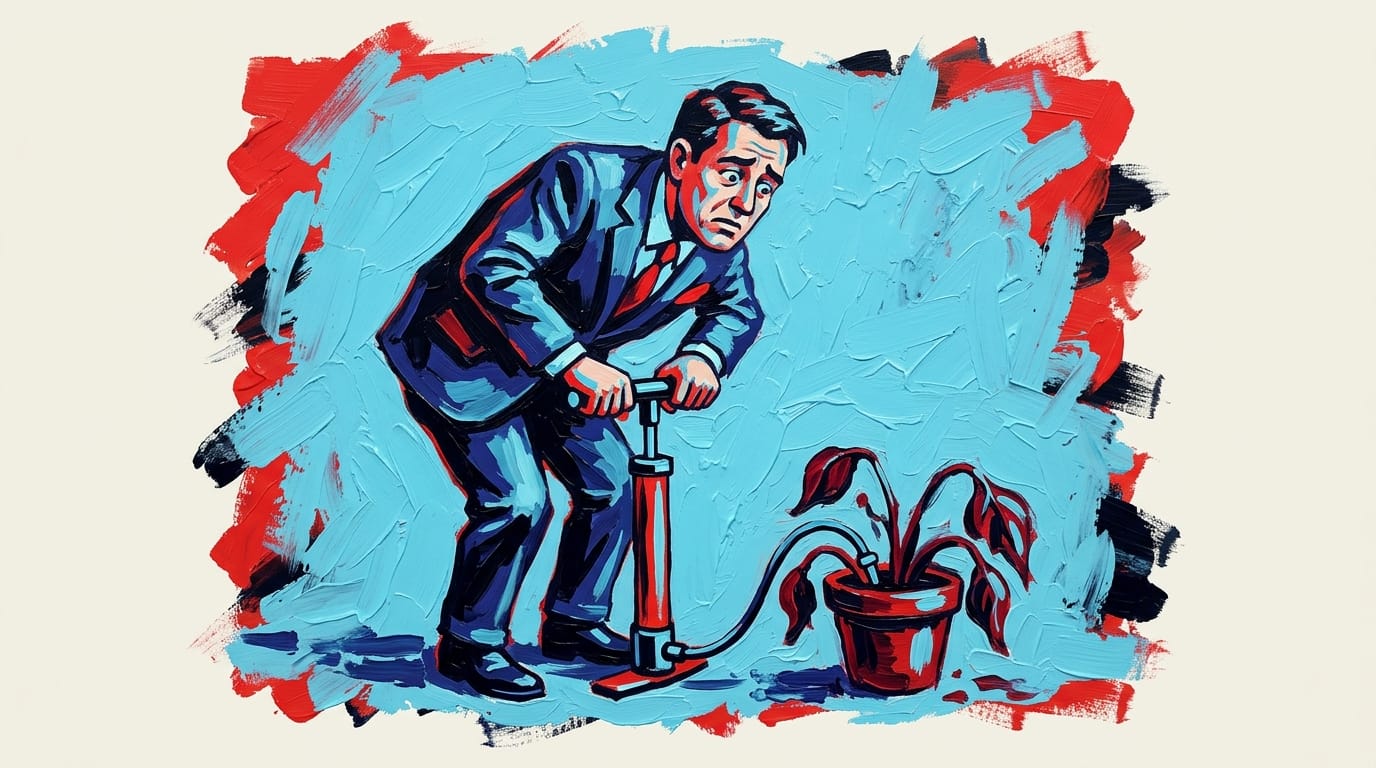
Growth Stalls as Inflation-Fighting Costs Compound
Australia's economy grew 0.3 per cent in the March quarter, and the Treasurer called it "very solid in the circumstances." He is not entirely wrong. Annual growth of 2.5 per cent is ahead of most major advanced economies, business investment has surged to its highest share of GDP in nearly a decade, and the labour market has held together better than most forecasters expected when the Reserve Bank began its tightening cycle. But read past the press release and the same numbers that tell a story of resilience also tell a story of strain: households are still absorbing rate rises that have not fully passed through, productivity fell in the quarter, and the GDP figure itself is barely a rounding error above stagnation.
Business investment is surging, but investment and productivity are not the same thing
The headline business investment number is the most genuinely encouraging figure in the release. New business investment grew 5.7 per cent in the quarter and 10.4 per cent through the year, driven by machinery and equipment spending at rates not seen in over two decades. Data centres and renewable energy infrastructure are doing a lot of the work here, and the CAPEX survey data pointing to around $200 billion in nominal spending in each of the next two years suggests this is not a one-quarter event. That is a real structural shift, and it is fair to acknowledge it plainly.
But there is a distinction worth drawing. Investment is not the same as productivity. You can build a great deal and produce relatively little from it, at least in the short run. Productivity actually declined in the March quarter. The annual figure is up 0.3 per cent, which is better than nothing but well below the kind of sustained improvement that lifts living standards in any durable way. The Treasurer acknowledges the "longstanding productivity challenge" and points to budget measures to address it. He may be right that the investment now coming online will eventually show up in the productivity numbers. That is a plausible story. It is also one that has been told before without arriving.
The Treasurer acknowledges the "longstanding productivity challenge" and points to budget measures to address it. He may be right that the investment now coming online will eventually show up in the productivity numbers. That is a plausible story. It is also one that has been told before without arriving.
Households are being squeezed from both sides, and the rate cycle's cost has not finished arriving
On the household side, the picture is more sober. Consumption grew 0.5 per cent in the quarter, which is positive, but mortgage interest costs were up 5.1 per cent in the quarter alone. The full impact of recent rate movements, the statement notes carefully, "will be reflected in future quarters." This is the slow-motion quality of monetary policy that makes it so difficult to calibrate in real time. The Reserve Bank tightens, households feel it with a lag, and by the time the damage is visible in the data it is often too late to course-correct without creating a new problem. The question of whether the rate cycle was correctly sized is genuinely contested, and the data here does not resolve it. What it does show is that the cost has not finished arriving.
The elevated fuel prices noted in the accounts, linked to global conflict driving up oil prices, add a layer of external pressure that monetary policy cannot do much about. Household budgets are being squeezed from both directions: financing costs on one side, energy and fuel costs on the other. Compensation of employees growing 1.2 per cent in the quarter provides some buffer, and the wage share of income at 54.2 per cent is a genuine improvement on where it sat when this government took office. But nominal wages growth and real purchasing power are not the same thing when prices in the National Accounts measure are still running at 3 per cent annually.
The export detraction is a one-off, but the commodity dependence is not
Net exports detracted 0.8 percentage points from growth, largely because weather disrupted iron ore and coal shipments. That is a one-off effect, and it would be a mistake to read too much into it structurally. What is worth watching, however, is the broader exposure of an export mix still heavily weighted toward commodities that are sensitive to weather, logistics disruptions, and the investment decisions of trading partners who are themselves navigating significant uncertainty.
The end of energy bill relief is quietly tightening the household squeeze
The public sector nearly absented itself from the quarter entirely. Government consumption fell 0.2 per cent, partly because energy bill relief payments have ended. The Treasurer frames this as fiscal responsibility, and within the conventional accounting that is accurate. But the end of those payments means households previously cushioned from energy cost increases are now absorbing them directly, which flows back into the consumption and real income numbers in ways the headline growth figure does not disaggregate cleanly.
An economy growing at 2.5 per cent annually, with business investment running hot and unemployment low, is not an economy in crisis. But 0.3 per cent quarterly growth with productivity going backwards and households still digesting rate rises is not an economy running at full capacity either. The investment surge is the most credible reason for optimism. The question is whether it is building the kind of productive capacity that generates broad income growth, or whether it is activity that flatters the GDP line without yet changing much for the household that is watching its mortgage costs rise and its fuel bill climb.
The answer to that question is probably still being written in real time. But that is precisely what makes honest reading of the quarterly data worthwhile.
Sources
Treasury Ministers — National Accounts: March quarter 2026
Frequently Asked Questions
Why did Australia's economy only grow 0.3% in the March quarter 2026?
Growth was held back by a combination of still-flowing rate rise impacts on households, a 0.8 percentage point drag from weather-disrupted commodity exports, and the end of government energy bill relief payments. The underlying economy is expanding, but households are absorbing the lagged cost of the Reserve Bank's tightening cycle at the same time external pressures are biting.
What is driving Australia's business investment surge in 2026?
New business investment grew 10.4 per cent through the year to March 2026, powered chiefly by data centre construction and renewable energy infrastructure. Machinery and equipment spending is running at rates not seen in over two decades, and forward CAPEX surveys point to around $200 billion in nominal spending in each of the next two years.
Why did Australian productivity fall even as business investment surged?
Productivity declined in the March quarter despite the investment boom because new capital takes time to generate output gains — you can build a great deal and produce relatively little from it in the short run. The annual productivity figure was up just 0.3 per cent, well below the sustained improvement needed to lift living standards in any durable way.
How are Australian households being affected by interest rate rises in 2026?
Mortgage interest costs rose 5.1 per cent in the March quarter alone, and the National Accounts release notes that the full impact of recent rate movements will only be reflected in future quarters. Households are simultaneously facing elevated fuel costs driven by global conflict, meaning the squeeze is coming from both financing costs and energy prices at once.
Is Australia's 2.5% annual GDP growth actually strong compared to other countries?
At 2.5 per cent annually, Australia is outpacing most major advanced economies, and the labour market has held together better than many forecasters expected when the rate tightening cycle began. However, quarterly growth of just 0.3 per cent with productivity declining means the economy is not running at full capacity — the annual figure flatters what is a more constrained picture at the household level.