Three-quarters of Australian children exceed screen time limits, ABS data shows
Nearly three in four Australian children exceed the government's screen time limit — but the harder question is whether the limit itself still makes sense.

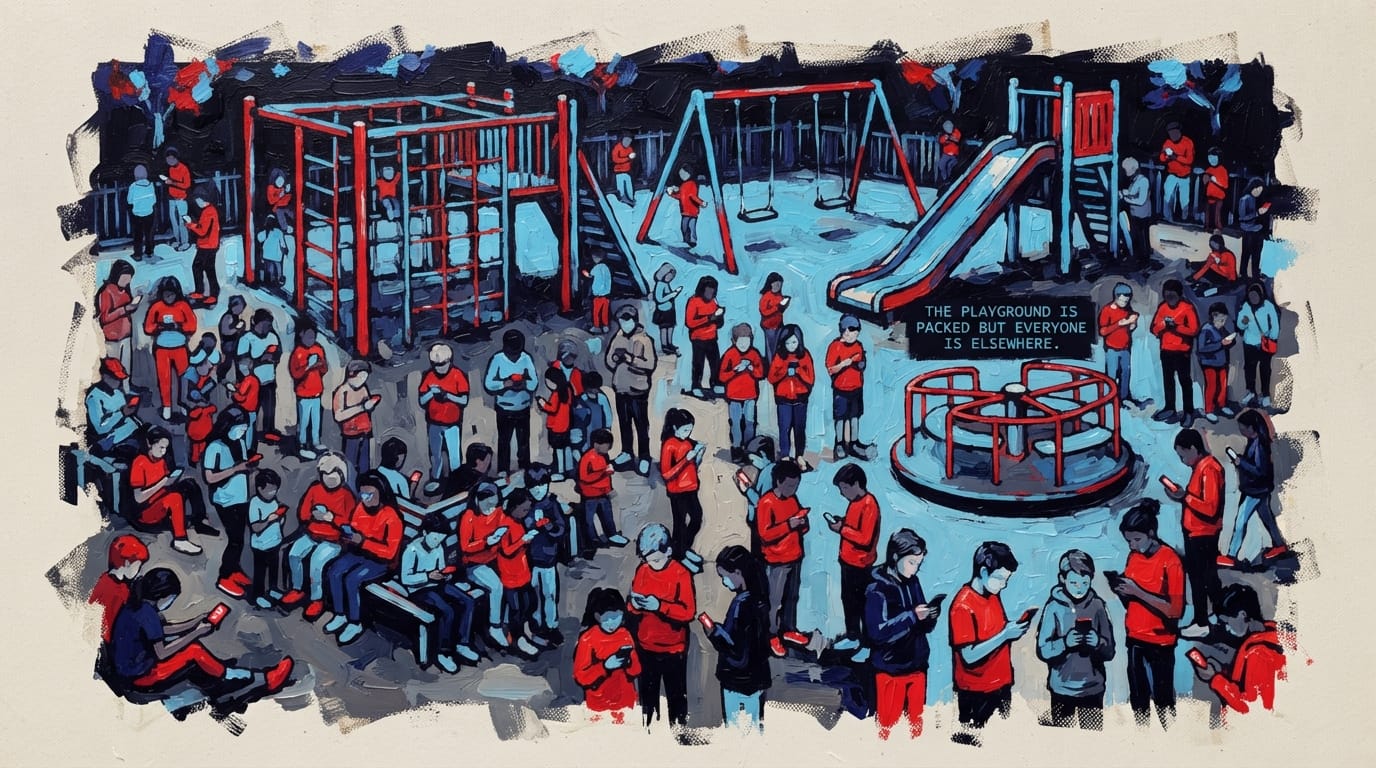
Three-quarters of Australian children exceed screen time limits, ABS data shows
Ask any parent whether their kids spend too long staring at screens, and most will say yes before you have finished the question. Now the Australian Bureau of Statistics has put a number on it: only 27.8 per cent of children aged 5 to 17 meet the federal government's guidelines for sedentary screen time, which cap recreational use at two hours a day. That means nearly three in four Australian children are, by official definition, in sustained non-compliance with health guidelines.
The average across all children is two hours and 51 minutes of sedentary screen time per day. Among 15 to 17-year-olds, that figure climbs above four hours. Among 5 to 8-year-olds, it sits just under two hours, meaning even the youngest cohort is brushing against the ceiling. The ABS is careful to note that screen time for study purposes is excluded from these figures. This is recreational screen time only.
The guidelines were not drawn from thin air — but a 73 per cent failure rate demands scrutiny
It is worth pausing on what the guidelines actually represent. The 24-hour movement guidelines, published by the Department of Health, Disability and Ageing, were developed on the basis of research linking prolonged sedentary behaviour in children with a range of adverse outcomes, including reduced sleep quality, poorer mental health indicators, and lower levels of physical activity. The science behind them is not trivial. But a guideline that fewer than three in ten children meet on any given day is a guideline that needs to be interrogated, not simply repeated.
There are two honest ways to read that gap. The first is that the guidelines are correct and the population is genuinely doing something harmful at scale, which would suggest a serious public health problem requiring a serious policy response. The second is that the guidelines were set at a level that reflected research ideals rather than the reality of modern childhood, in which screens are embedded in nearly every form of social life, entertainment, and communication. The data alone cannot settle which interpretation is right, but it forces the question.
Health guidelines that bear no relationship to actual behaviour patterns do not change behaviour. They erode trust in the institutions that issue them.
The physical activity picture adds texture. Only 18.3 per cent of children meet the guidelines for physical activity, which require 60 minutes of moderate to vigorous movement every day. The average child manages about an hour and 25 minutes, but not consistently across all seven days. Active transport, including walking and cycling to school, accounts for roughly 17 minutes of that daily average. So children are moving, just not reliably enough, and often not in the sustained, vigorous bursts the guidelines specify.
Non-compliance is the norm — and that makes the policy options genuinely uncomfortable
What this produces is a portrait of Australian childhood in which the majority of kids are, on paper, falling short on both screens and physical activity simultaneously. Either we are in the midst of a substantial and underacknowledged public health failure, or the guidelines are functioning more as aspirational benchmarks than as realistic population targets. Possibly both are true at once.
The policy question that follows is genuinely difficult. If the guidelines are sound, the response options are uncomfortable: regulatory limits on devices or platforms for minors, school-based interventions, or sustained public health campaigns of the kind that eventually shifted smoking rates. All of these come with their own trade-offs, and none has a clean evidence base for producing large-scale change in recreational screen behaviour. Countries that have pursued social media age restrictions, including Australia with its own under-16 ban, are operating largely without proof of efficacy, because the interventions are new and the research lags the policy.
If, on the other hand, the guidelines need revision, that is also a legitimate conclusion, and not a capitulation to convenience. Health guidelines that bear no relationship to actual behaviour patterns do not change behaviour. They erode trust in the institutions that issue them.
The ABS data does not answer that question. What it does is make it impossible to keep treating the gap between guidelines and reality as a minor discrepancy. Three-quarters of the country's children are outside the recommended limit. That is not a niche compliance problem. It is the norm. And when non-compliance is the norm, the policy framework that defines it as such deserves a harder look than it has received.
Sources
Australian Bureau of Statistics — 1 in 4 children meet screen time guidelines in 2023
Frequently Asked Questions
What is Australia's screen time guideline for children?
The federal government's 24-hour movement guidelines cap recreational sedentary screen time at two hours per day for children aged 5 to 17. Screen time used for study is excluded from this limit.
How much screen time are Australian children actually getting?
The average across all children aged 5 to 17 is two hours and 51 minutes of recreational sedentary screen time per day. Among 15 to 17-year-olds, that figure exceeds four hours.
Why do so few children meet the screen time guidelines if the guidelines are based on health research?
The guidelines were drawn from research linking prolonged sedentary screen use to worse sleep, mental health, and physical activity outcomes. But screens are now embedded in nearly every form of children's social life and entertainment, meaning the guideline may reflect research ideals set before this reality fully took hold.
What happens when a health guideline is consistently missed by most of the population?
Guidelines with near-universal non-compliance face two credibility problems simultaneously: if the underlying health concern is real, the scale of harm is being ignored; if the target is unrealistic, the guideline erodes trust in the institutions that issue it. Either outcome argues for a formal policy review rather than continued repetition of the same benchmark.
Do Australian children also fail to meet physical activity guidelines?
Yes. Only 18.3 per cent of Australian children meet the guideline requiring 60 minutes of moderate to vigorous physical activity every day. The average child gets around an hour and 25 minutes, but not consistently across all seven days of the week.