Why the ABC is paying to advertise itself — and what that tells us about public broadcasting
Why is Australia's public broadcaster spending millions to advertise itself instead of making programs?

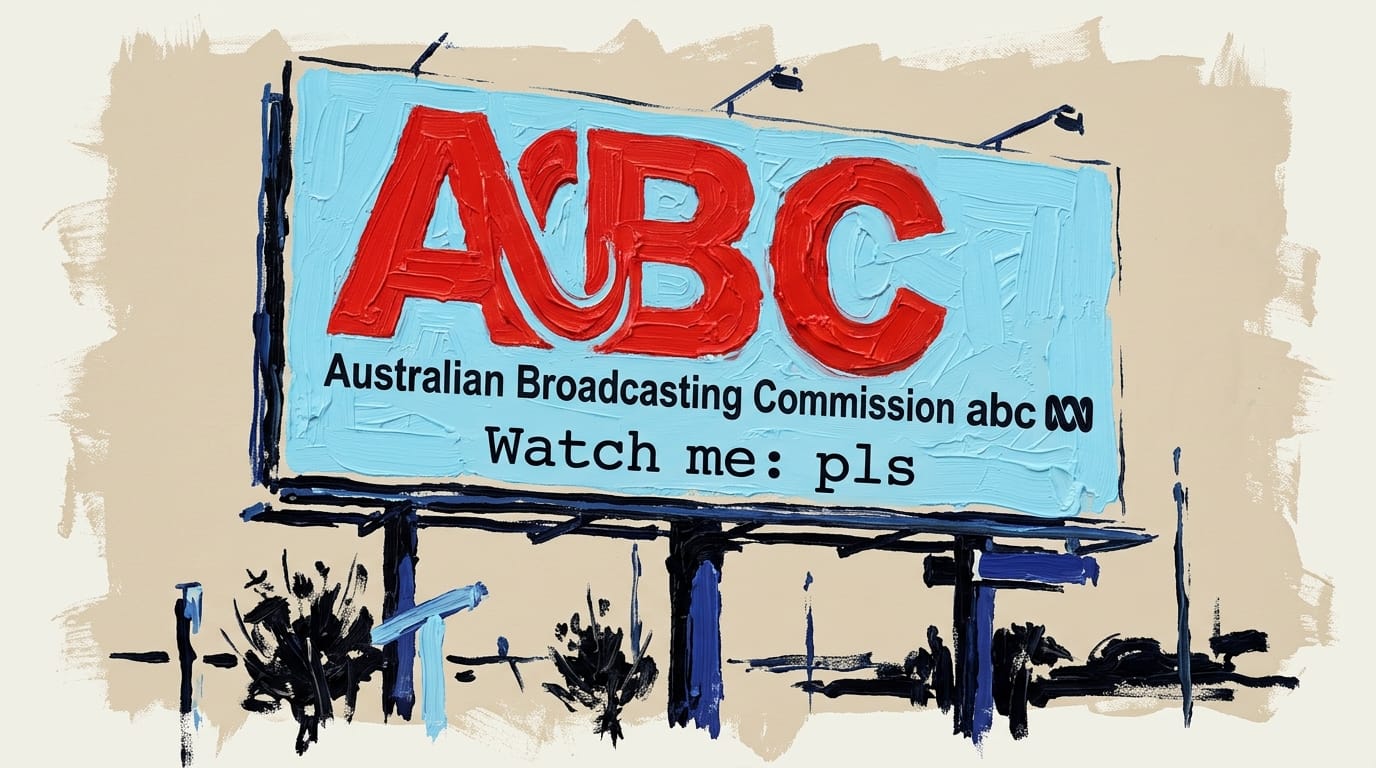
Why the ABC is paying to advertise itself — and what that tells us about public broadcasting
The ABC has doubled its advertising spend in the past year, plastering billboards, public transport hubs, and social media feeds with promotions for a broadcaster that Australians have been paying for since 1932. That fact alone is strange enough to warrant examination. The question is not whether the ABC should promote itself at all. The question is what it means that it feels it must, and at this scale, and right now.
Start with the money. ABC funding is not indexed to its real operating costs. That is not a new problem, but it is a compounding one. Each year that passes without genuine indexation is another year the broadcaster does something with less, whether that is journalism, regional coverage, or the kind of slow, expensive public interest programming that no commercial network would touch. This dynamic is not unique to Australia. It is the same mechanism that hollowed out the BBC's commissioning budgets and pushed SBS toward advertising revenue as a structural crutch rather than a marginal supplement.
What changes when the funding pressure becomes chronic is the institutional logic. Organisations that cannot argue for their budget on mission alone start arguing for it on audience. If you cannot say "we do things no one else will do," you say "we reach people no one else reaches." And to say that credibly, you need the numbers. To get the numbers, you need the audience. To grow the audience in a fragmented digital media landscape where streaming services and social platforms are fighting for exactly the same attention, you advertise.
There is nothing irrational about this sequence. It follows directly from the incentive structure the ABC operates inside. But it produces a result that ought to make anyone who cares about public broadcasting uncomfortable: the broadcaster is now allocating public funds not to make better journalism or better programming, but to prove to politicians that people are watching the journalism and programming it already makes. It is paying to justify itself.
Critics on the right, including the IPA, have pointed to this as evidence the ABC should be privatised or defunded entirely, on the grounds that a competitive media environment no longer requires a publicly funded broadcaster. That argument has a certain internal logic but it proves too much. Commercial media does not fail to cover regional Australia because it lacks the resources. It fails to cover regional Australia because there is no commercial return in doing so. The ABC fills that gap because it is structured not to need one. Advertising spend does not change that structural reality. It just papers over the funding argument with audience figures that look, superficially, like market demand.
The more revealing detail is what the advertising blitz signals about the ABC's read of its own political position. Institutions that feel secure in their mandate do not spend money proving they have an audience. They spend money serving one. The fact that the ABC is doing the former suggests it has made a judgement, probably a correct one, that its triennial funding negotiations are increasingly fought on commercial terrain: reach, platform metrics, digital engagement. The advertising spend is preparation for that fight, not a distraction from it.
That is the funding crisis hiding in plain sight. It is not a single dramatic cut of the kind the Abbott government delivered in 2014. It is the slower erosion of a broadcaster gradually adopting the assumptions and behaviours of the commercial sector in order to survive within a funding framework that was never designed to account for what public media actually costs in the digital age. The billboards are the most visible expression of that erosion, but they are not the cause. They are the effect.
What matters is whether that trajectory reverses or continues. If government funding remains unindexed and the political case for the ABC keeps resting on reach rather than mission, the logical endpoint is a broadcaster that is free to watch but structured to think like a subscription service. The public broadcasting tower, to borrow the image, starts to look less like a civic landmark and more like another billboard among many.
That would be a quiet kind of loss, the kind that only becomes visible once it is already complete.
Sources
The Australian — ABC ad spending blitz 'shameful use of taxpayer funds'
Public Broadcasting Cannot be Taken for Granted — Appendix C
ABC News — You'll miss it when it's gone: Why public broadcasting is worth saving